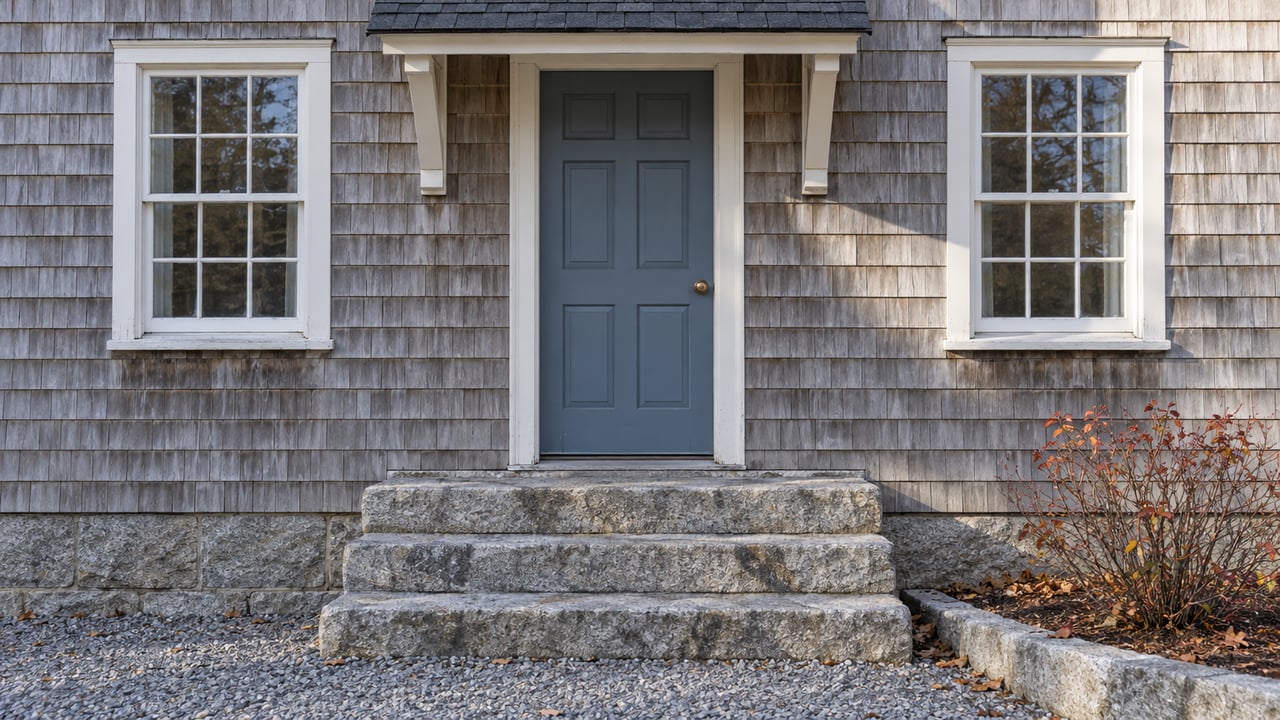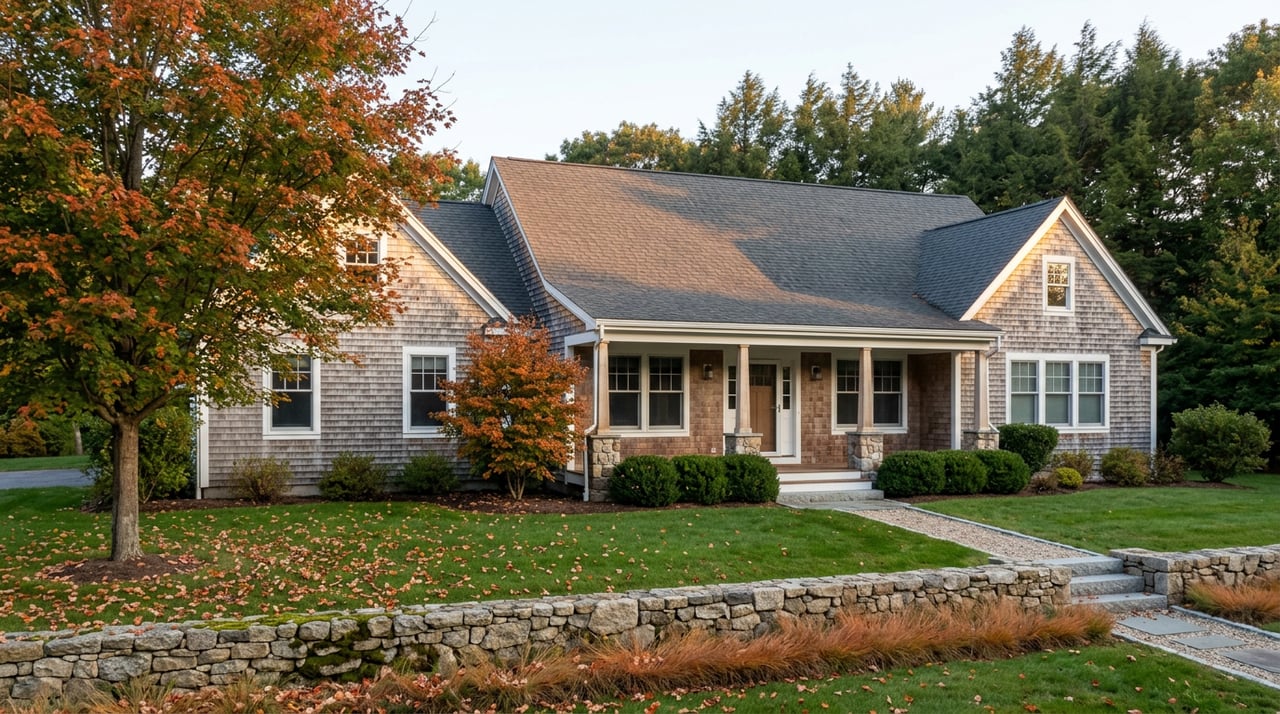
An assessor in Hampden stood outside a house this spring, looked up at the chimney, and wrote down that the home had a fireplace. Nobody had let anyone inside. The assessor never verified it. According to Hampden's own tax assessor Rick Thibodeau, that kind of inference happened more than once during this year's reassessment: new siding or new windows on the outside sometimes led the assessing company to assume the interior had been updated too, whether or not that was true.
That detail matters for a reason that has nothing to do with chimneys. It tells you how this year's numbers were built, and it tells you why the property tax figure sitting on a Hampden listing right now cannot be trusted the way a buyer normally trusts it.
Hampden just finished its first town-wide property revaluation since 1992. Maine law recommends municipalities redo this work roughly every ten years and requires assessed values to stay within 70 to 110 percent of actual market value. Hampden had drifted outside that range, sitting on 34-year-old data while home values around it moved without it. The town brought in Municipal Consulting Group of Maine to walk every parcel, inspect what they could, and rebuild the numbers from scratch, with new values based on an April 1, 2026 assessment date.
The obvious read on that story is "Hampden taxes are going up." The more useful read, the one that actually changes how you budget for a house here this year, is that the relationship between what a house is worth and what its owner will pay is being reset almost at random relative to the price you're negotiating today. Two houses that sell for the same amount this fall could walk away with very different tax pictures, not because of anything either buyer did, but because of how badly each house's old assessment had drifted from reality.
Why a Higher Assessment Doesn't Automatically Mean a Higher Bill
Dozens of Hampden homeowners pushed back on their new values this spring after reassessment letters went out, according to reporting from the Bangor Daily News. Some of that pushback was legitimate: houses valued as though they had upgrades they never received. But Thibodeau told the paper that a jump in assessed value doesn't directly translate into a bigger tax bill, and that most reassessed homes will likely see their bill go down or stay flat.
Here's the mechanic behind that claim. Hampden's mil rate, $17.65 per thousand dollars of valuation for the 2025-2026 tax year now closing out, isn't a fixed number the town picks in isolation. It's the town's total budget divided by the total assessed value of everything in town. If the revaluation pushes the town's total valuation up, the mil rate gets recalculated downward to raise the same amount of money, not more. The pattern the revaluation firm has described elsewhere is a rough thirds split: about a third of properties see their tax bill go up because they'd been paying less than their fair share under the old numbers, a third see it go down for the same reason in reverse, and a third land close to where they started.
That's the piece a buyer needs to sit with. The current listing's tax bill was calculated under the old mil rate against a decades-stale assessment. The new mil rate isn't finalized until the town, county, and school budgets are locked in and the tax commitment is set, a step Hampden's own tax commitment records show landing in mid-August in each of the last several years. If you're reading this in September, that commitment has likely already happened, which means the real number now exists somewhere in the assessor's office even if it hasn't reached every listing sheet yet.
There's a second lever pulling in the other direction, and it isn't part of the revaluation at all. Hampden's payment to Penobscot County rose by roughly $260,000 this year compared to last, the second-largest dollar increase of any town in the county, driven in part by rising costs at the Penobscot County Jail. Town Manager Paula Scott has said that money could have covered a capital expense like a public works vehicle instead. The county mil rate ticked up six cents to $1.43 per thousand, meaning a $200,000 property paid about $12 more in county tax this year than last. That charge lands regardless of what the town-level revaluation does to your bill. A buyer weighing a Hampden purchase is really watching two separate mechanisms move at once: a town reset that could push your number either direction, and a county cost that's already trending up.
The Homestead Exemption Gap Nobody Mentions At Closing
There's a quieter piece of this that catches new buyers specifically. Maine's homestead exemption knocks $25,000 off a property's taxable value, but only for owners who have lived in and owned the home as their primary residence for a full year as of April 1. Buy a house in Hampden this year and close in the fall, and you will not have that exemption applied to your first tax bill. Your longtime neighbor in an identical house, who has held the homestead exemption for years, will be taxed on $25,000 less of value than you are on paper, even if the two houses are assessed identically.
That's not a Hampden quirk so much as a Maine-wide rule, but it collides directly with the revaluation timing this year. A buyer comparing the seller's most recent tax bill to what they'll actually owe needs to account for both the new assessed value and the fact that they're starting the clock over on an exemption the current owner may already be receiving.
What The Appeal Window Actually Buys You
If you're negotiating on a house whose owner has filed or is considering an appeal of their new assessment, it's worth asking directly. Hampden's process starts informally: a homeowner can meet with the assessor to walk through how a value was determined, which is often enough to correct a data error like the chimney-fireplace assumption. If that doesn't resolve it, the owner can file a written application for abatement. If the assessor denies it, the homeowner has 60 days to bring the case to the town's Board of Assessment Review, where the burden of proof sits with the taxpayer, not the town.
Thibodeau has said that changing a reassessment for a legitimate reason, like an inspector overstating interior features never seen firsthand, is a straightforward fix once flagged, and that homeowners who raised it early gave the town time to correct it before this summer's bills went out. For a buyer closing now, that window has mostly closed for the current cycle, which is exactly why it's worth asking a seller whether they disputed their new value and how it was resolved before you rely on their most recent bill as a guide.
What To Actually Check Before You Write an Offer
- Ask whether the listed tax figure reflects the old (pre-2026) assessment or the town's new reassessed value.
- Ask whether the seller has filed or plans to file an abatement request, and on what grounds.
- Confirm the seller currently holds the homestead exemption, and understand that you won't inherit it on day one.
- Don't assume the $17.65 per thousand mil rate from the 2025-2026 tax year still applies. That figure belongs to the cycle the revaluation is replacing, and a new rate reflecting the updated valuations and the county's own increase should already be committed or close to it by the time you're reading this.
- If a house's assessed value jumped sharply this spring, ask why. It may be a straightforward market catch-up, or it may be a data assumption worth double-checking with the assessor's office.
The Honest Answer Is Call The Assessor's Office
None of this means Hampden is becoming a more expensive place to own a home. It means the tax number attached to any given house may still be a placeholder rather than a forecast, depending on exactly when this cycle's commitment landed. The town's own assessor has said plainly that a bigger assessed value doesn't guarantee a bigger bill. Buyers and sellers working from a tax figure that predates this year's commitment are both working from a number that's already been replaced, whether or not the listing sheet has caught up. A quick call to Hampden's assessing office, at 207-862-8363, will tell you whether the figure in front of you reflects the old cycle or the new one.
FAQ
Will my property tax bill go up if I buy in Hampden this year? It depends on how the home's old assessment compared to its actual market value, not on the price you're paying. Homes that were undervalued under the 1992-era numbers are more likely to see an increase; homes that were already close to market value may see little change or a decrease once the new mil rate is applied.
When was the new mil rate set? It follows the town, school, and county budgets being finalized and the tax commitment being completed. Hampden's past few tax commitments have landed in mid-August, so if you're reading this in September, the new rate tied to this revaluation has most likely already been committed. Confirming the exact figure with the assessing office is worth the phone call before you finalize a purchase budget.
Can I challenge my assessed value after I buy? Yes. The process starts with a conversation with the town assessor's office and, if unresolved, moves to a written abatement application and potentially the town's Board of Assessment Review, with the homeowner responsible for making the case.
Does this affect every part of Hampden the same way? No. The town's own materials describe a rough split where about a third of properties see increases, a third see decreases, and a third stay close to flat, which means two similarly priced homes in different parts of town could end up with different outcomes.
If you're weighing a purchase or a sale in Hampden this year and want a clear read on how the revaluation is likely to touch a specific property, that's exactly the kind of local detail Aimi Baldwin Real Estate can walk through with you before you write an offer or set a list price. Request a free home valuation and we'll help you separate what's actually changing from what just looks unfamiliar on paper.