Looking for a Maine town where outdoor fun fits into your everyday routine? Hermon stands out because it offers easy access to skiing, pond time, trails, and a practical commute to the Bangor area, all while keeping the rural feel many buyers want. If you are exploring places to live near Bangor, this guide will help you understand Hermon’s lifestyle, its local area patterns, and what kinds of homes you may find. Let’s dive in.
Why Hermon Appeals to Outdoor-Minded Buyers
Hermon offers a four-season lifestyle that feels approachable, not far-off or hard to maintain. The town’s planning documents describe a community that aims to support growth in service-ready areas while preserving rural character and open space. That balance is a big part of why Hermon feels both convenient and relaxed.
For many buyers, the appeal is simple. You can enjoy outdoor recreation close to home, then still stay connected to Bangor and the region’s main travel corridors. With an average commute time of 22.7 minutes, Hermon can be a practical choice if you want room to spread out without feeling too far from daily essentials.
The housing picture supports that lifestyle too. Hermon is largely an owner-occupied community, with 75.2% of occupied homes owner-occupied, and the town’s housing stock is still dominated by detached homes. If you picture larger lots, a quieter setting, and space for gear, hobbies, or everyday outdoor living, Hermon may feel like a natural fit.
Outdoor Recreation in Hermon
Hermon Mountain in Winter
Hermon Mountain is one of the town’s best-known recreation anchors. Located at 441 Newburgh Road, this family-owned ski area offers skiing and snowboarding lessons, tubing, equipment rentals, night skiing, and terrain for beginners through experts. That mix makes it a real local asset, whether you are new to snow sports or already have a favorite winter routine.
For buyers, this matters because it turns winter into part of the lifestyle instead of a season you have to work around. Being near a local ski and tubing spot can make casual weeknight outings or weekend plans much easier. It also adds to Hermon’s identity as a town where recreation is built into daily life.
Hermon Pond in Warmer Months
When the weather shifts, Hermon Pond becomes another major draw. The town’s comprehensive plan notes public access by foot at Vafiades Landing on Bog Road and Jackson Beach Road off Newburgh Road, and the state also lists a Hermon Pond boat launch. That gives residents several ways to enjoy one of Hermon’s signature water features.
Hermon Pond is described by Maine Inland Fisheries and Wildlife as a shallow warm-water fishery. Principal species include largemouth bass, smallmouth bass, black crappie, white perch, and chain pickerel. If you enjoy casual fishing, paddling, or simply spending time near the water, this part of Hermon can be especially appealing.
Trails for Everyday Use
Outdoor living in Hermon is not limited to big weekend plans. The town maintains a walking trail system for outdoor recreation and non-motorized transportation, along with many motorized trails. The local trail network also connects the school area, including the high school and elementary school, which adds to the practical, everyday side of the town’s outdoor story.
That kind of access can shape how a town feels. Instead of recreation being something you have to drive far to find, it can become part of your normal routine. For many buyers, that convenience is just as important as the scenery itself.
Understanding Hermon’s Local Areas
Hermon is better understood as a collection of local pockets than a town of formal, sharply defined neighborhoods. Long-standing place names include Hermon Corner, North Hermon, Snow’s Corner, Hermon Pond, Hermon Center, and Hermon Mountain. This reflects the town’s broader planning framework, which separates growth areas from rural zones and helps explain the variety you will see from one part of town to another.
A helpful way to think about Hermon is through three lifestyle patterns. You may prefer a more village-oriented setting, a recreation-focused setting, or a quieter rural-lot setting. Each one offers a different rhythm of daily life.
Hermon Corner Area
Hermon Corner is the clearest example of a more compact, village-scale pocket in town. Hermon’s plan supports village-scale density in growth areas and notes that within one-half mile of Hermon Corner there are three apartment or housing complexes, plus an elementary school and a high school. That makes this area one of the more service-linked and built-up parts of Hermon.
If you want easier access to town activity and a setting that feels a bit more connected, Hermon Corner may be worth a closer look. Buyers who prefer less land to maintain or want to explore a smaller number of apartment or multi-family options may find this area especially practical. It can also appeal to people who want a location tied closely to everyday errands and routines.
Hermon Pond and Hermon Mountain Areas
If your priority is lifestyle-driven recreation, the pockets around Hermon Pond and Hermon Mountain can stand out. These areas offer proximity to some of Hermon’s best-known outdoor destinations, which can influence how often you actually use them. Living near the places you enjoy often makes a bigger difference than you expect.
In these areas, you may find a blend of detached homes, manufactured homes on individual lots, and homes with a little more breathing room. The draw is often less about a compact neighborhood layout and more about location, access, and the day-to-day feel of being close to recreation.
Rural Road Network Areas
Farther out along Hermon’s road network, the town often shifts into a quieter rural-lot pattern. This is where Hermon’s goal of preserving open space and rural character becomes more visible. If you are looking for privacy, larger yards, or a more tucked-away setting, these parts of town may align with what you have in mind.
This pattern also helps explain why Hermon does not feel uniform. One road may offer a more developed cluster, while another quickly opens into lower-density residential areas. For buyers, that means it is important to match your preferred lifestyle with the right local pocket, not just the town name.
What Types of Homes You May Find
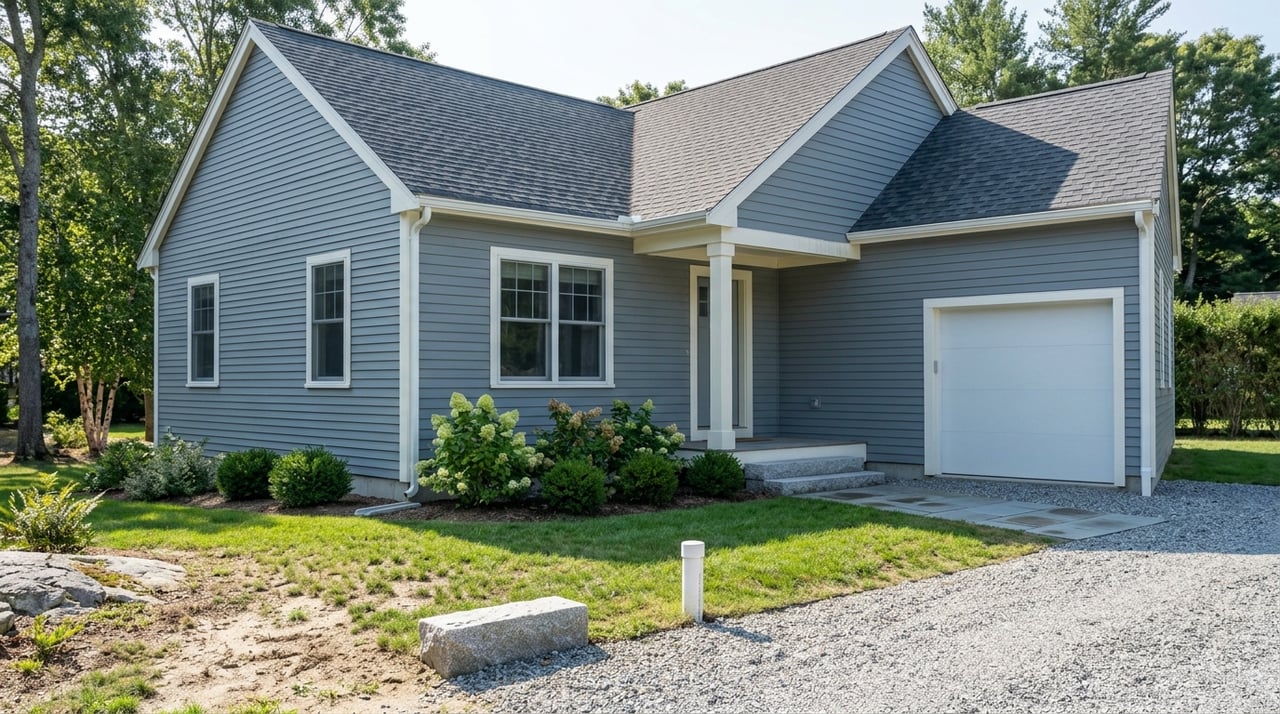
Detached homes make up the majority of Hermon’s housing stock. In 2020, about 78.5% of housing units were one-unit detached homes, while 8.3% were in two- to four-unit buildings, 1.5% were in five- to nine-unit buildings, and 10.4% were manufactured housing. Recent construction also leaned heavily toward single-family homes, with 259 single-family homes among 314 new homes recorded from 2017 through 2023.
That data gives you a pretty clear picture of what to expect. If you are shopping in Hermon, you are most likely to encounter detached homes first, often on individual lots and in settings that support a quieter, more spread-out feel. Smaller multi-unit options exist, but they are not the dominant pattern across town.
Utilities are another important piece of the home search. Most residences rely on individual wells and septic systems, while public water and sewer are concentrated in limited areas such as Route 2 and Northern Maine Junction, along with a few developments served by community systems. In practical terms, this can affect the kinds of properties you consider and the questions you ask during your search.
How to Choose the Right Hermon Area
The best Hermon location for you depends on how you want your days to look. If you want a more connected, village-oriented setting, start by exploring the Hermon Corner area. If skiing, tubing, fishing, or pond access are high on your list, focus on areas near Hermon Mountain or Hermon Pond.
If your priority is elbow room and a stronger rural feel, broaden your search to the town’s quieter residential roads and larger-lot areas. These areas may offer the sense of space many buyers associate with Hermon in the first place. The tradeoff is that your home may rely on well and septic systems and sit farther from service-ready corridors.
It also helps to think about your routine in every season. A home that feels ideal in July should still make sense in January. In a town like Hermon, where four-season recreation is a real part of daily life, that year-round perspective can help you choose more confidently.
Why Hermon Works for Bangor-Area Buyers
Hermon’s location is a big part of its appeal. The town plan identifies I-95 as Hermon’s only arterial and highlights Route 2 and Coldbrook Road as major movement corridors, reinforcing its connection to the Bangor area and regional travel routes. For many buyers, that means you do not have to choose between access and breathing room.
This is especially attractive if you want a home base that supports both practical living and weekend fun. Hermon can give you access to the Bangor market area while still offering a more rural visual character and a recreation-forward identity. That combination is not always easy to find.
If you are considering a move to Hermon, it helps to work with a local team that understands how these small area differences shape value, lifestyle, and the overall fit of a property. Aimi Baldwin Real Estate offers personalized guidance for buyers and sellers across Greater Bangor, helping you narrow your search and move forward with confidence.
FAQs
What is outdoor life like in Hermon, Maine?
- Hermon offers four-season recreation with skiing and tubing at Hermon Mountain, warm-weather access to Hermon Pond, and town-maintained trails for everyday walking and outdoor use.
What are the main neighborhood areas in Hermon?
- Hermon is best understood as a group of local areas or pockets, including Hermon Corner, North Hermon, Snow’s Corner, Hermon Pond, Hermon Center, and Hermon Mountain, rather than formal neighborhoods.
What kinds of homes are common in Hermon?
- Detached homes are the most common housing type in Hermon, with smaller numbers of multi-family properties and manufactured homes.
What is the Hermon Corner area like?
- Hermon Corner is one of the more village-oriented parts of town, with more compact development patterns and nearby housing complexes within a growth-area setting.
Does Hermon have public water and sewer?
- Public water and sewer are limited and concentrated in areas such as Route 2 and Northern Maine Junction, while many homes in Hermon rely on individual wells and septic systems.
Is Hermon convenient for commuting to Bangor?
- Yes, Hermon is closely tied to the Bangor area, and the Census reports an average commute time of 22.7 minutes.